Skip to product information
1 of 1

THE BOOK OF TALIESYN

THE BOOK OF TALIESYN

Regular price $16.98 USD
Regular price $16.98 USD Sale price $16.98 USD
Sale Sold out
Shipping calculated at checkout.

Out of stock

Quantity

Shipping Information

We carefully package every order to help ensure your records and media arrive safely. Orders are typically processed promptly, and tracking information is provided once your shipment is on its way.

Shipping costs and delivery estimates are calculated at checkout based on your location and selected shipping method.

View Shipping Policy

Returns & Exchanges

We want you to shop with confidence. If there's an issue with your order, we're here to help.

New, unopened items may be returned in accordance with our Return Policy. For complete details, including return eligibility and timeframes, please review our full Return Policy before making your purchase.

View Return Policy

Collector's Guide

Every collection tells a story.

Whether you're buying your first record or adding a rare pressing to your shelves, understanding editions, formats, and release details can help you make informed collecting decisions. At Vibin' Vinyl, we believe collecting is about more than just owning the music—it's about appreciating the artwork, packaging, mastering, and history behind every release.

Looking to expand your collecting knowledge?

Explore our Collector's Guide for tips, format guides, and collecting advice.

Read the Collector's Guide

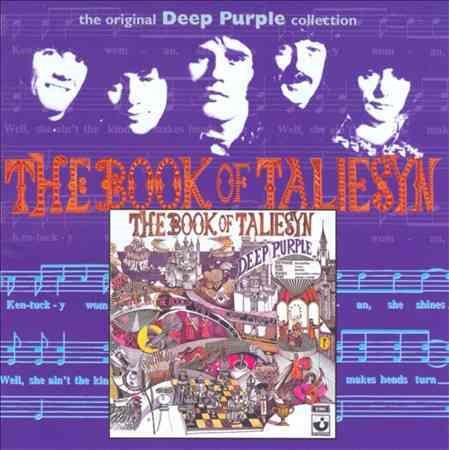
Deep Purple: Rod Evans (vocals); Ritchie Blackmore (guitar); Jon Lord (keyboards); Nicky Simper (bass); Ian Paice (drums). Personnel: Jon Lord (vocals, organ); Nick Simper (vocals, bass guitar); Rod Evans (vocals); Ritchie Blackmore (guitar); Ian Paice (drums). Recording information: De Lane Lea, London (08/1968). Several months after the innovative remake of "You Keep Me Hanging On," England's answer to Vanilla Fudge was this early version of Deep Purple, which featured vocalist Rod Evans, and bassist Nick Simper, along with mainstays Ritchie Blackmore, Jon Lord, and Ian Paice. This, their second album, followed on the heels of "Hush," a dynamic arrangement of a Joe South tune, far removed from the flavor of one of his own hits, "Walk a Mile in My Shoes." Four months later, this album's cover of Neil Diamond's Top 25, 1967 gem "Kentucky Woman," went Top 40 for Deep Purple. Also like Vanilla Fudge, the group's own originals were creative, thought-provoking, but not nearly as interesting as their take on cover tunes. Vanilla Fudge did "Eleanor Rigby," and Deep Purple respond by going inside "We Can Work It Out" -- it falls out of nowhere after the progressive rock jam "Exposition," Ritchie Blackmore's leads zipping in between Rod Evans smooth and precise vocals. As Vanilla Fudge was progressively leaning more towards psychedelia, here Deep Purple are the opposite. The boys claim to be inspired by the Bard of King Arthur's court in Camelot, Taliesyn. John Vernon Lord, under the art direction of Les Weisbrich, paints a superb wonderland on the album jacket, equal to the madness of Hieronymous Bosch's cover painting used for the third album. Originals "The Shield" and "Anthem" make early Syd Barrett Pink Floyd appear punk in comparison. Novel sounds are aided by Lord's dominating keyboards, a signature of this group. Though "The Anthem" is more intriguing than the heavy metal thunder of Machine Head, it is overwhelmed by the majesty of their "River Deep, Mountain High" cover, definitely not the inspiration for the Supremes and Four Tops 1971 hit version. By the time 1972 came around, Deep Purple immersed themselves in dumb lyrics, unforgettable riffs, and a huge presence, much like Black Sabbath. The evolution from progressive to hard rock was complete, but a combination of what they did here -- words that mattered matched by innovative musical passages -- would have been a more pleasing combination. Vanilla Fudge would cut Donovan's "Season of the Witch," Deep Purple followed this album by covering his "Lalena"; both bands abandoned the rewrites their fans found so fascinating. Rod Evans' voice was subtle enough to take "River Deep, Mountain High" to places Ian Gillam might have demolished. ~ Joe Viglione
View full details