Skip to product information
1 of 1

POPULAR PROBLEMS

POPULAR PROBLEMS

Regular price $30.98 USD
Regular price $30.98 USD Sale price $30.98 USD
Sale Sold out
Shipping calculated at checkout.

Out of stock

Quantity

Shipping Information

We carefully package every order to help ensure your records and media arrive safely. Orders are typically processed promptly, and tracking information is provided once your shipment is on its way.

Shipping costs and delivery estimates are calculated at checkout based on your location and selected shipping method.

View Shipping Policy

Returns & Exchanges

We want you to shop with confidence. If there's an issue with your order, we're here to help.

New, unopened items may be returned in accordance with our Return Policy. For complete details, including return eligibility and timeframes, please review our full Return Policy before making your purchase.

View Return Policy

Collector's Guide

Every collection tells a story.

Whether you're buying your first record or adding a rare pressing to your shelves, understanding editions, formats, and release details can help you make informed collecting decisions. At Vibin' Vinyl, we believe collecting is about more than just owning the music—it's about appreciating the artwork, packaging, mastering, and history behind every release.

Looking to expand your collecting knowledge?

Explore our Collector's Guide for tips, format guides, and collecting advice.

Read the Collector's Guide

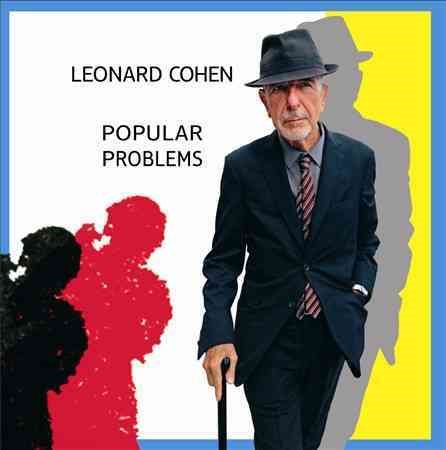
Leonard Cohen's Popular Problems is an uncharacteristically quick follow-up to 2012's Old Ideas. That record, cut in the aftermath of a multi-year tour, revitalized him as a recording artist. Producer Patrick Leonard (Madonna, Bryan Ferry) serves as co-writer on all but one tune on Popular Problems. While Cohen's sound has revolved around keyboards since 1988's I'm Your Man, Leonard gets that the real power in the songwriter's lyrics are best relayed through his own own simple melodies. Everything here -- keys, female backing chorus, acoustic instrumentation, etc. -- is in their service. As always, Cohen's songs -- delivered in his deepest earth rasp -- offer protagonists who are ambivalent spiritual seekers, lusty, commitment-phobic lovers, and jaded, untrusting/untrustworthy world citizens. He is them, they are him: strangers hiding in plain sight. Opener "Slow" is paced by a blues vamp from an electric piano and kick drum. "...You want to get there soon/I want to get there last..." is delivered in a streetwise croak. It's a fine career metaphor, but the hilarious double entendre is self evident, too: "...All your turns are tight/Let me catch my breath/I thought we had all night." "Almost Like the Blues" employs a 12-bar variant exoticized by hand percussion. Cohen juxtaposes visions of global horror with worry over bad reviews; he's culpable because of his vanity. Gospel provides illustration on some of the better songs -- there are no weak ones. It's used with razored effect on "Samson in New Orleans" to address the devastation -- physical, emotional, spiritual -- left by Hurricane Katrina. Cohen really attempts to sing "Did I Ever Love You." Though it comes out a measured growl, its impact is searing. It shifts from gospel to country jaunt only to circle back, underscoring the bitter, vulnerable truth in the lyric. He observes: "The lemon trees blossom/The almond trees wither," before asking: "Was I ever someone/Who could love you forever?"; he knows the answer. The keyboards and tablas in "Nevermind," a narrative of treachery and global hypocrisy, create skeletal, tense funk. They're appended by Donna De Lory's Arabic chant for peace and safety in contrast to the lyric's scathing accusations. Gospel returns on "Born in Chains," a gentle but gripping first-person account of spiritual seeking with references to Judaism, Christianity, and Cohen's adopted Zen: "...I've heard the soul unfolds/In the chambers of its longing...But all the Ladders of the Night have fallen/Only darkness now/To lift the longing up." On set closer "You Got Me Singing," Cohen, accompanied only by acoustic guitar and violin, lays out hope: "You got me singing even though the world is gone/You got me thinking I'd like to carry on." It's an open-ended, affirmative sendoff. Popular Problems reveals that at 80, Cohen not only has plenty left in the tank, but is at his most confident and committed. This is his finest recording since 1995's The Future. ~ Thom Jurek
View full details