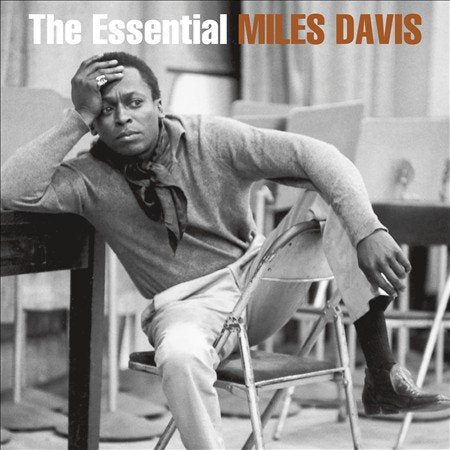
THE ESSENTIAL MILES DAVIS
THE ESSENTIAL MILES DAVIS
Out of stock
Couldn't load pickup availability
Shipping Information
Shipping Information
We carefully package every order to help ensure your records and media arrive safely. Orders are typically processed promptly, and tracking information is provided once your shipment is on its way.
Shipping costs and delivery estimates are calculated at checkout based on your location and selected shipping method.
Returns & Exchanges
Returns & Exchanges
We want you to shop with confidence. If there's an issue with your order, we're here to help.
New, unopened items may be returned in accordance with our Return Policy. For complete details, including return eligibility and timeframes, please review our full Return Policy before making your purchase.
Collector's Guide
Collector's Guide
Every collection tells a story.
Whether you're buying your first record or adding a rare pressing to your shelves, understanding editions, formats, and release details can help you make informed collecting decisions. At Vibin' Vinyl, we believe collecting is about more than just owning the music—it's about appreciating the artwork, packaging, mastering, and history behind every release.
Looking to expand your collecting knowledge?
Explore our Collector's Guide for tips, format guides, and collecting advice.
Originally released as a 2 LP set. Personnel: Miles Davis (trumpet); Lee Konitz, Cannonball Adderley, Jackie McLean (alto saxophone); Jimmy Heath (tenor saxophone); Gerry Mulligan (baritone saxophone); J.J. Johnson, Kai Winding (trombone); Junior Collins (French horn); John Barber (tuba); Horace Silver, Al Haig, Hank Jones, Gil Coggins (piano); Joe Shulman, Oscar Pettiford, Percy Heath, Sam Jones (bass); Art Blakey, Max Roach, Kenny Clarke (drums). Producer: Pete Rugolo, Alfred Lion. Compilation producer: Michael Cuscuna. Engineers include: Doug Hawkins, Rudy Van Gelder. Recorded in New York, New York on January 21, 1949; WOR Studios, New York, New York on May 9, 1952 and April 20, 1953; the Van Gelder Studio, Hackensack, New Jersey on March 6, 1954 and March 9, 1958. Personnel includes: Miles Davis (trumpet); Bill Evans (soprano saxophone); Charlie Parker (alto & tenor saxophones); Lee Konitz, Julian "Cannonball" Adderley (alto saxophone); John Coltrane, Sonny Rollins, Jimmy Heath, Hank Mobley, Wayne Shorter (tenor saxophone); Gerry Mulligan (baritone saxophone); Ernie Royal (trumpet); Kai Winding, J.J. Johnson, Jimmy Clevelnd (trombone); Jerome Richardson (flute, clarinet); Dizzy Gillespie, Horace Silver, Red Garland (piano); Herbie Hancock, Marcus Miller, Dave Holland (keyboards); Keith Jarrett (organ); John Scofield (guitar); Paul Chambers, Ron Taylor (bass); Max Roach, Philly Joe Jones, Kenny Clarke, Art Taylor, Jack DeJohnette (drums); Airto Moreira, Paulinho Da Costa (percussion). Producers include: Teo Macero, Pete Rugolo, Bob Weinstock, Alfred Lion, George Avakian. Compilation producers: Michael Cuscuna, Bob Belden, Steve Berkowitz, Seth Rothstein. Engineers include: Doug Hawkins, Rudy Van Gelder, Fred Plaut. Recorded between 1945 & 1986. Includes liner notes by Bob Blumenthal. Davis spent the most groundbreaking years of his career on Columbia; volume eight of that label's "This Is Jazz" series offers a survey, however inherently limited, of his work from 1955 to 1965, a period that covers his two classic quintets, the recording of KIND OF BLUE and his first work with Gil Evans. What THE BEST OF MILES DAVIS includes is material from BIRTH OF THE COOL, represented by three cuts from that LP, and from sessions done between 1952 and 1954 that featured musicians like J.J. Johnson, Jackie McLean, Jimmy Heath, Percy Heath and Art Blakey. It's an interesting period, in that neither Blue Note nor Davis had quite developed into the icons they were about to become. Ironically, with the final two cuts on this collection (from 1959's SOMETHING ELSE), both the label and Miles can be heard doing precisely what they became best known for: the album, released under Cannonball Adderly's name, imparts the smoky, noir atmosphere that characterized Blue Note's reputation as the home of hard bop, while Davis, radically reinterpreting standards like "Autumn Leaves," sounds at once pointillistic, introspective and decidedly badass.
Share