Skip to product information
1 of 1

GOT CHANGE FOR A MILLION

GOT CHANGE FOR A MILLION

Regular price $22.99 USD
Regular price $22.99 USD Sale price $22.99 USD
Sale Sold out
Shipping calculated at checkout.

Out of stock

Quantity

Shipping Information

We carefully package every order to help ensure your records and media arrive safely. Orders are typically processed promptly, and tracking information is provided once your shipment is on its way.

Shipping costs and delivery estimates are calculated at checkout based on your location and selected shipping method.

View Shipping Policy

Returns & Exchanges

We want you to shop with confidence. If there's an issue with your order, we're here to help.

New, unopened items may be returned in accordance with our Return Policy. For complete details, including return eligibility and timeframes, please review our full Return Policy before making your purchase.

View Return Policy

Collector's Guide

Every collection tells a story.

Whether you're buying your first record or adding a rare pressing to your shelves, understanding editions, formats, and release details can help you make informed collecting decisions. At Vibin' Vinyl, we believe collecting is about more than just owning the music—it's about appreciating the artwork, packaging, mastering, and history behind every release.

Looking to expand your collecting knowledge?

Explore our Collector's Guide for tips, format guides, and collecting advice.

Read the Collector's Guide

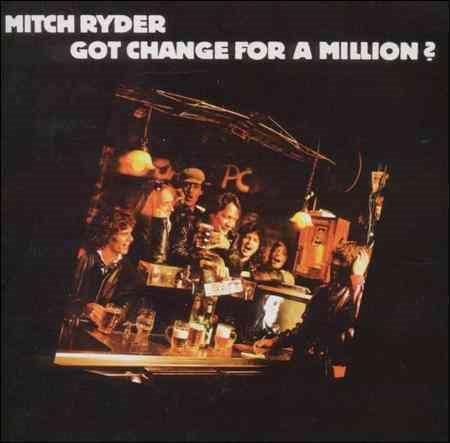
Personnel: Mitch Ryder (vocals); Rick Schein, Joe Gutc (guitar); Billy Csernits (keyboards); Marc Gougeon (bass); Wilson Owens (drums). Recorded at Delta Studios, Wilster, West Germany; Second Suite Studios, Detroit, Michigan. Mitch Ryder's Got Change for a Million?, released in 1981 in Germany on Line Records, continues the progression started on The Detroit-Memphis Experiment in 1969 and the subsequent Detroit album produced by Bob Ezrin. This is no-nonsense blues-tinged rock produced by Tom Conner along with Ryder. "That's Charm," clocking in at five-and-a-half minutes, is the longest track and indeed has charm. Although Ryder looks a bit haggard a mere 12 years after The Detroit-Memphis Experiment, his voice is intact and the tunes, all by Kim Levise and Ryder (aka William S. Levise, Jr.), have a concise poppy snap. "Red Scar Eyes" is a real departure, a moody piece with lyrics that go from introspection to downright deranged, a far cry from the efficient opening track "My Heart Belongs to Me." Included with the liner notes are the handwritten lyrics, from side one seen next to a full glass of beer, and from side two with a photo of a pen next to an empty glass. The earthy voice of Ryder found fame as an instrument for producer Bob Crewe and songs by Crewe, Burt Bacharach, Bill Medley, and others. Although side two's opening track "Bang Bang" fails, "Back at Work" and the reggae-flavored "Ich Bin Aus Amerika" succeed, showing Ryder's development from singer to singer/songwriter. The classic growl of this true, well-rounded journeyman is in fine shape on the exquisite "Bare Your Soul." "We're Gonna Win" opens with looping guitars and unique backing vocals, the band cooking behind Ryder's hard-driving voice. The album was recorded and mixed at Delta Sound Studio in Wilster, West Germany, except for the final two tracks, "Bare Your Soul" and "We're Gonna Win," which were tracked in Detroit. The album was "recorded and mixed without the aid of any reduction devices." Re-released on J-Bird Records in 1995, it's a good look at Mitch Ryder on his own. ~ Joe Viglione
View full details