Skip to product information
1 of 1

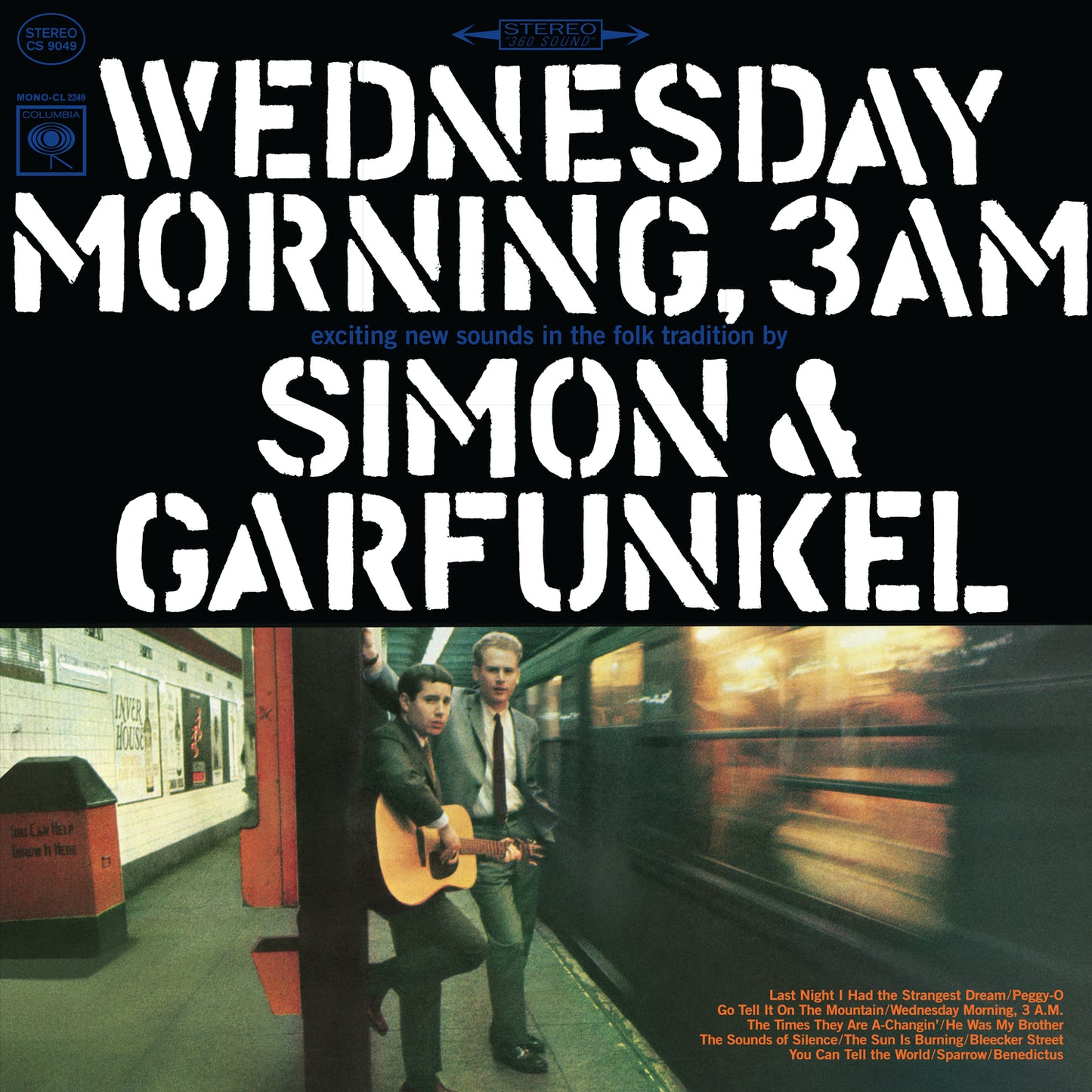
Wednesday Morning, 3 A.M.

Wednesday Morning, 3 A.M.

Regular price $34.99 USD
Regular price $34.99 USD Sale price $34.99 USD
Sale Sold out
Shipping calculated at checkout.

Low stock: 2 left

Quantity

Shipping Information

We carefully package every order to help ensure your records and media arrive safely. Orders are typically processed promptly, and tracking information is provided once your shipment is on its way.

Shipping costs and delivery estimates are calculated at checkout based on your location and selected shipping method.

View Shipping Policy

Returns & Exchanges

We want you to shop with confidence. If there's an issue with your order, we're here to help.

New, unopened items may be returned in accordance with our Return Policy. For complete details, including return eligibility and timeframes, please review our full Return Policy before making your purchase.

View Return Policy

Collector's Guide

Every collection tells a story.

Whether you're buying your first record or adding a rare pressing to your shelves, understanding editions, formats, and release details can help you make informed collecting decisions. At Vibin' Vinyl, we believe collecting is about more than just owning the music—it's about appreciating the artwork, packaging, mastering, and history behind every release.

Looking to expand your collecting knowledge?

Explore our Collector's Guide for tips, format guides, and collecting advice.

Read the Collector's Guide

Reissue producer: Bob Irwin. Recorded on March 10-31, 1964. Originally released on Columbia Records (9049). Includes liner notes by Art Garfunkel & Bud Scoppa. Wednesday Morning, 3 AM doesn't resemble any other Simon & Garfunkel album, mostly because their sound here was fundamentally different from that of the chart-topping duo that emerged a year later. Their first record together since their days as the teen harmony duo Tom & Jerry, the album was cut in March 1964, at a time when both Simon and Garfunkel were under the spell of folk music. As it had in 1957 with "Hey, Schoolgirl," their harmonizing here came out of the Everly Brothers' playbook, but some new wrinkles had developed -- Paul Simon was just spreading his wings as a serious songwriter and shares space with other contemporary composers. The album opens with a spirited (if somewhat arch) rendition of Gibson and Camp's gospel/folk piece "You Can Tell the World," on which the duo's joyous harmonizing overcomes the intrinsic awkwardness of two Jewish guys from Queens, New York doing this repertory. Also present is Ian Campbell's "The Sun Is Burning," a topical song about nuclear annihilation that Simon heard on his first visit to England as an itinerant folksinger the year before. But the dominant outside personality on the album is that of Bob Dylan -- his "Times They Are A-Changing" is covered, but his influence is obvious on the oldest of the Simon originals here, "He Was My Brother." Simon's first serious, topical song, dealing with the death of a freedom rider -- and dedicated to Simon's slain Queens College classmate Andrew Jacobs -- it was what first interested Columbia Records producer Tom Wilson in Simon & Garfunkel. By the time the album was recorded, however, Simon had evolved beyond Dylan's orbit and developed a unique songwriting voice of his own, though he still had some distance to go. His other originals betray the artifice of an English major at work, sometimes for better, as on "Sparrow" and the original, all-acoustic release of "The Sound of Silence," and at times for worse, on the half-beautiful but too-precious title song (which he would re-write more successfully as "Somewhere They Can't Find Me"). There are also a pair of traditional songs, a beautifully harmonized rendition of "Peggy-O" -- which they probably picked up in Greenwich Village, or from recordings by Dylan or Joan Baez -- and "Go Tell It On the Mountain," both of which fit well into the zeitgeist of the folk revival. The record didn't sell on its original release, however, appearing too late in the folk revival to attract much attention -- Bob Dylan was already taking that audience to new places by adding electric instruments to his sound. But the seeds of the duo's future success were planted when, months after the album had been given up for dead -- and the duo had split up -- the all-acoustic rendition of "The Sound of Silence" started getting radio play on its own in some key markets, which possessed to producer Wilson to try and adapt it to the new sound, overdubbing an electric band. ~ Bruce Eder
View full details