We carefully package every order to help ensure your records and media arrive safely. Orders are typically processed promptly, and tracking information is provided once your shipment is on its way.
Shipping costs and delivery estimates are calculated at checkout based on your location and selected shipping method.
We want you to shop with confidence. If there's an issue with your order, we're here to help.
New, unopened items may be returned in accordance with our Return Policy. For complete details, including return eligibility and timeframes, please review our full Return Policy before making your purchase.
Whether you're buying your first record or adding a rare pressing to your shelves, understanding editions, formats, and release details can help you make informed collecting decisions. At Vibin' Vinyl, we believe collecting is about more than just owning the music—it's about appreciating the artwork, packaging, mastering, and history behind every release.
Looking to expand your collecting knowledge?
Explore our Collector's Guide for tips, format guides, and collecting advice.
This is an Enhanced CD, which contains both regular audio tracks and multimedia computer files.
The Special AKA: Stan Campbell, Rhoda Dakar (vocals); Jerry Dammers (vocals, piano, organ, bongos); John Shipley (guitars, percussion); Gary McManus (bass); John Bradbury (drums, synthesizer, bass).
Additional personnel: Roddy Radiation (guitar); Nick Parker (violin); David Heath (flute); Paul Speare (penny whistle); Andy Aderinto (saxophone); Dick Cuthell (cornet, flugelhorn, piano, bass); Rico Rodriguez (trombone); Horace Panter (bass); Tony "Groko" Utah (congas); Egidio Newton, Naomi Thompson, Caron Wheeler, Elvis Costello, Ranking Roger, Claudia Fontaine, Lynval Golding, Dave Wakeling, Molly Jackson, Polly Jackson (background vocals).
Producers: Jerry Dammers, Dick Cuthill, Elvis Costello.
Engineers include: Johnny Rivers, Steve Churchyard, Mark Freegard.
Includes liner notes by Adrian Thrills.
Digitally remastered by Noel Summerville (Transfermation)
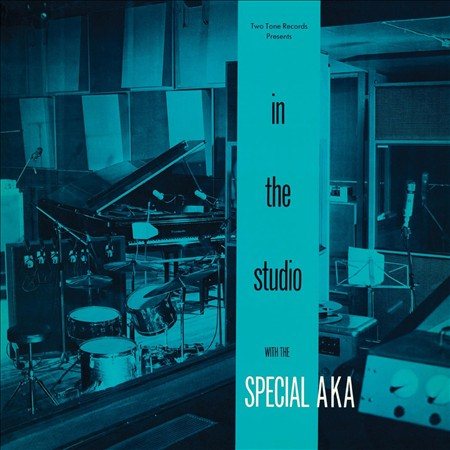
Three years and a reputed ?500,000 pounds in the making, and what was the result? For starters, an album that just scraped into the U.K. Top 35 and a set that rounded up three out of the four Special A.K.A. singles: "War Crimes," the double A-sided "Racist Friend"/"Bright Lights," and "Nelson Mandela," as well as the latter's 12" B-side, "Break Down the Door," and a set that spun off the group's final release, "What I Like Most About You Is Your Girlfriend." Thus, half the album had already spun at 45, poor value for the money. However, at a time when Wham!, Frankie Goes to Hollywood, and Duran Duran reigned supreme, In the Studio was offering something distinctly different, which explains its popularity. This was Jerry Dammers' baby, and the birthing had been decidedly difficult. And it's no wonder considering just how far Dammers had taken his music, light years from the Specials' roots and miles even from the group's more diverse More Specials finale. "Housebound," for example, is absolutely claustrophobic, the rhythm disconcerting and the melody moving into no wave territory. "The Lonely Crowd" is even more dislocating, with the club-meets-funk rhythm crashing into the no wave jazz atmosphere, while the purer club strains of "Nite on the Tiles" are equally disturbing, with its odd blend of genres. Even the more accessible numbers have bite and exceedingly sharp edges, from the frustration that fills the soul-styled "Break Down" to the derision that floods the lyrics of "Bright Lights" and on to the cutting theme of the dreamy, roots-flavored "Girlfriend." Dammers' world view was growing ever darker, and his lyrics reflect this polarization. Where once there was thoughtful reasoning laced with sarcasm, here the coddling is gone, and even the irony is heavy-handed. Proof is found in the uncompromising "Racist Friend," where Dammers insists one should sever such relationships rather than attempt to alter such opinions. The evocative, Arab-esque "War Crimes" is even more militant. Israel's invasion of Lebanon, in much of the world's opinion, certainly qualified as a war crime, but many felt that Dammers overstepped the mark by comparing it to Nazi death camps. Only the warm melody and gentle delivery prevent the song from being dismissed as an outright polemic. But the 2-Toner now saw the world only in black and white, searingly condemning everything around him. Which is why "Mandela" comes as such a shock smack-dab in the middle of the set. Its glorious melody, jubilant atmosphere, and exuberant optimism are the only bright moments on the entire album, a single song of hope which crumbles to dust by sequencing it just before the horrors of "War Crimes." That, like everything else on this album, was deliberate, and underscored the total desolation that Dammers saw all around him. It's an ugly vision, but the world is very much like that. ~ Jo-Ann Greene